
The Dewerstone
Part of the much loved Crag Notes series, for UKClimbing.

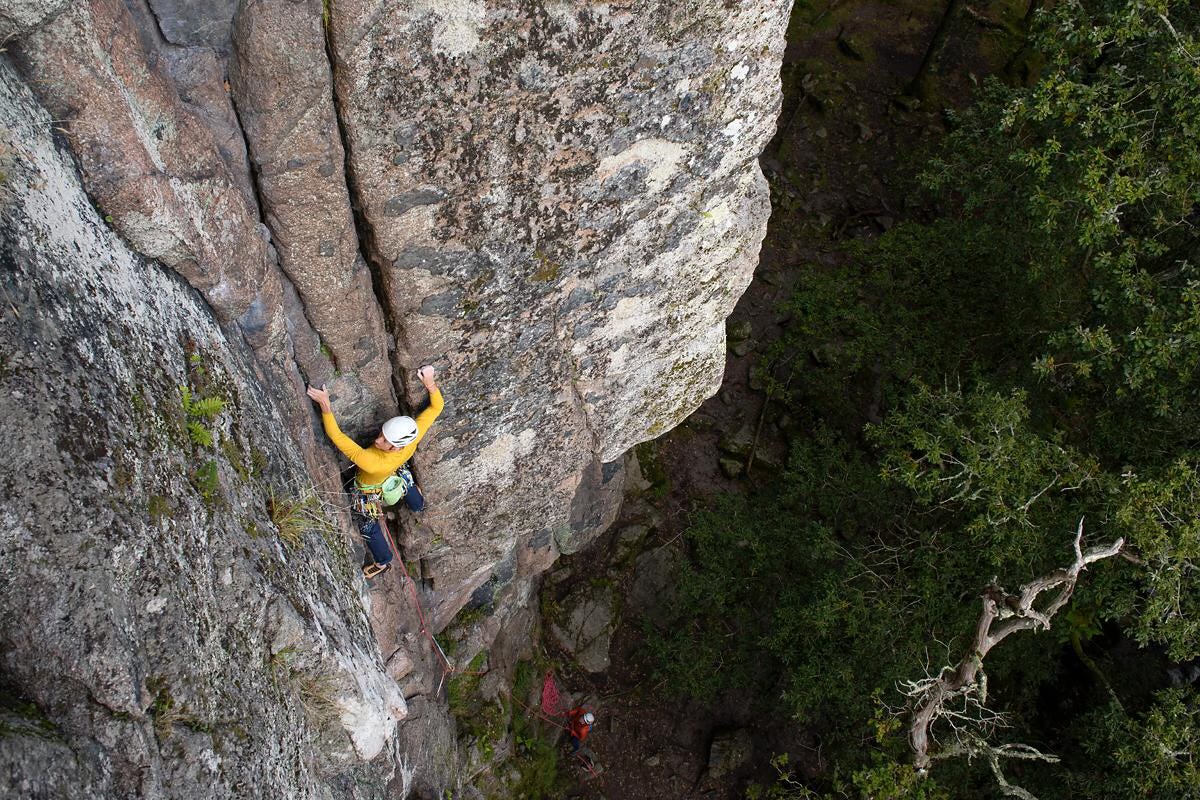
You can hardly blame Nick White, for his beloved South Devon & Dartmoor Guide is brimful of demons and goblins, but its pages did shape my expectations of The Dewerstone. The Devil’s Rock, Raven Buttress and route names like ‘Leviathan’, all gave it a certain foreboding. The crag name itself derives from a bit of typical Dartmoor folklore, Dewer being olde Devonshire for Devil - and the legend tells that He would use his hounds to drive folk to their doom off the top of the towering cliffs.
Over the years, this perception couldn’t have been further removed from how I came to feel about Dartmoor’s most extensive crag. But then the Dewerstone doesn’t typify Dartmoor climbing at all really. The grey, sharp granite of the higher Moor Tors is by and large quite abrasive and its very best climbing is (probably) its bouldering, although the razor-esque character of the feldspars do promote an unusual static style (you quickly learn that slapping cheese-grater slopers doesn’t really foster longevity in a session). The trad on the high Moor is mostly a bit...well...awkward, too much slightly insecure slopeyness and fiddly wonky gear for my liking, plus, it’s all exposed to the worst of any weather.
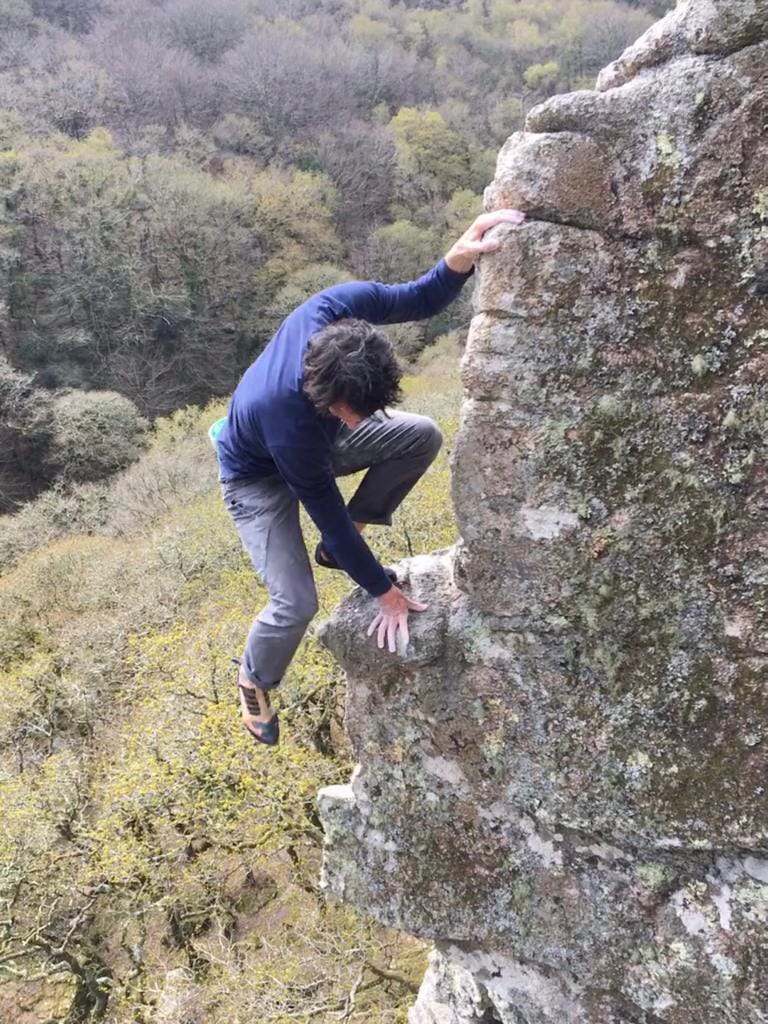
In contrast, the Dewerstone granite is distinctly different: rising directly from the fairyland banks of the River Plym, and by its upper pitches, gazing regally above the tree canopy of the wooded valley below. The rock is browner in hue, softer and kinder than the grey stuff, and imbued with the kind of jugs that almost shake you by the hand. Under your touch it feels more heavily weathered, but it is afforded some protection from the elements amongst the trees. It’s more akin in style and substance to the pinky, golden, Cornish granite of West Penwith. The best of the climbing is low to middle grade, including Devon’s only Classic Rock selection: Climbers Club Ordinary. On this occasion Mr. Wilson got it wrong - it’s not even in the best five routes on the buttress, never mind the pick of the crag or county.
A few years ago I used The Stone to practise soloing for an upcoming trip. Lots of Dartmoor climbing is highball - micro-route territory, and to be honest, you only get a few seconds to practise soloing on some of those crags. The bigger cliffs, Haytor for example, just feel a bit…
Hard.
Scary.
Slopey.
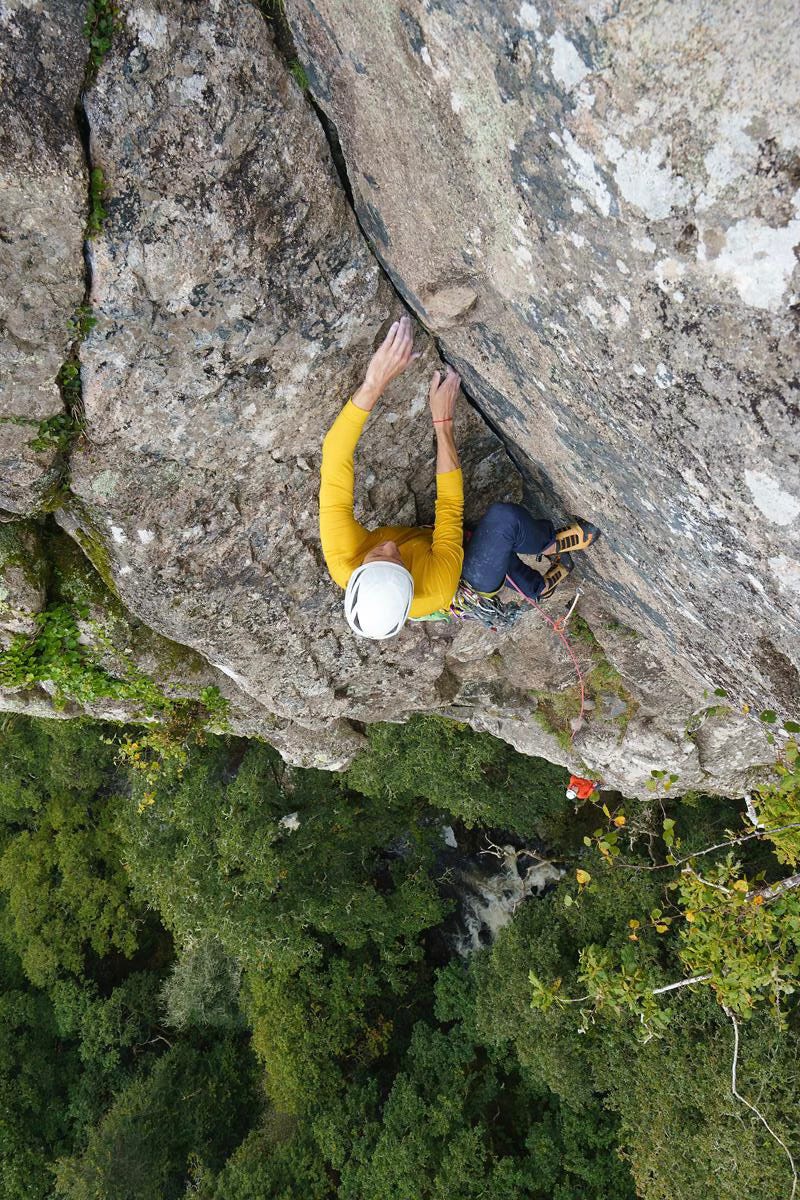
The multi-pitch nature of The Dewerstone, coupled with the relatively easy grades, made it an obvious choice. Steep and tall enough to be airy, but never in a threatening or intimidating way. There’s a security in the holds and angles that make it welcoming and kind, whilst the noise of the tumbling Plym has a meditative quality. Being above the trees is a very pretty place to be too. It’s not an astonishing, jaw-dropping view, but it is wonderful in a charmingly gentle Devon way.
This soloing circuit has been something of a unique experience in my personal climbing, inasmuch as I keep going back to it. Ordinarily I tend not to repeat too many routes (unless they’re spellbinding, why waste a perfectly good weather day doing things you’ve done before?), but for some reason I’ve never wearied of my cherished Dewerstone circuit.
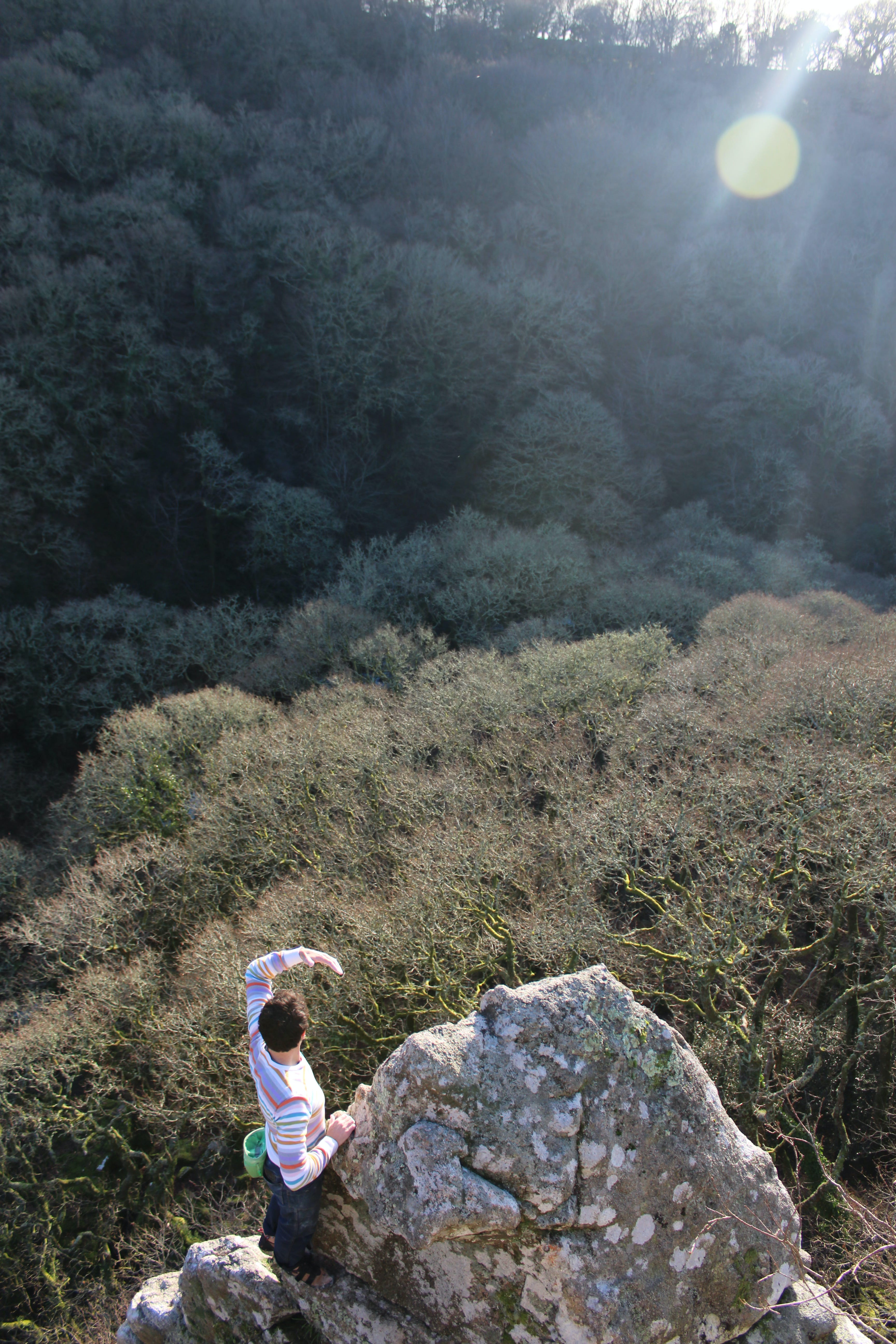
Nick White described the Devil’s Rock as “...majestic...gorged (almost to bursting) with middle grade gems - this is the premier arena of the crag.” As so often, he was bang on the money, and it was my mistake to perceive the crag as intimidating, because it’s not - it’s homely. For the vast majority of climbers who operate in the low to middle grades (which is to say, the vast majority of us) this is the best crag in Devon. It has more than a hint of the magical too (the river path in particular has that ‘might see a pixie‘ ambience about it).
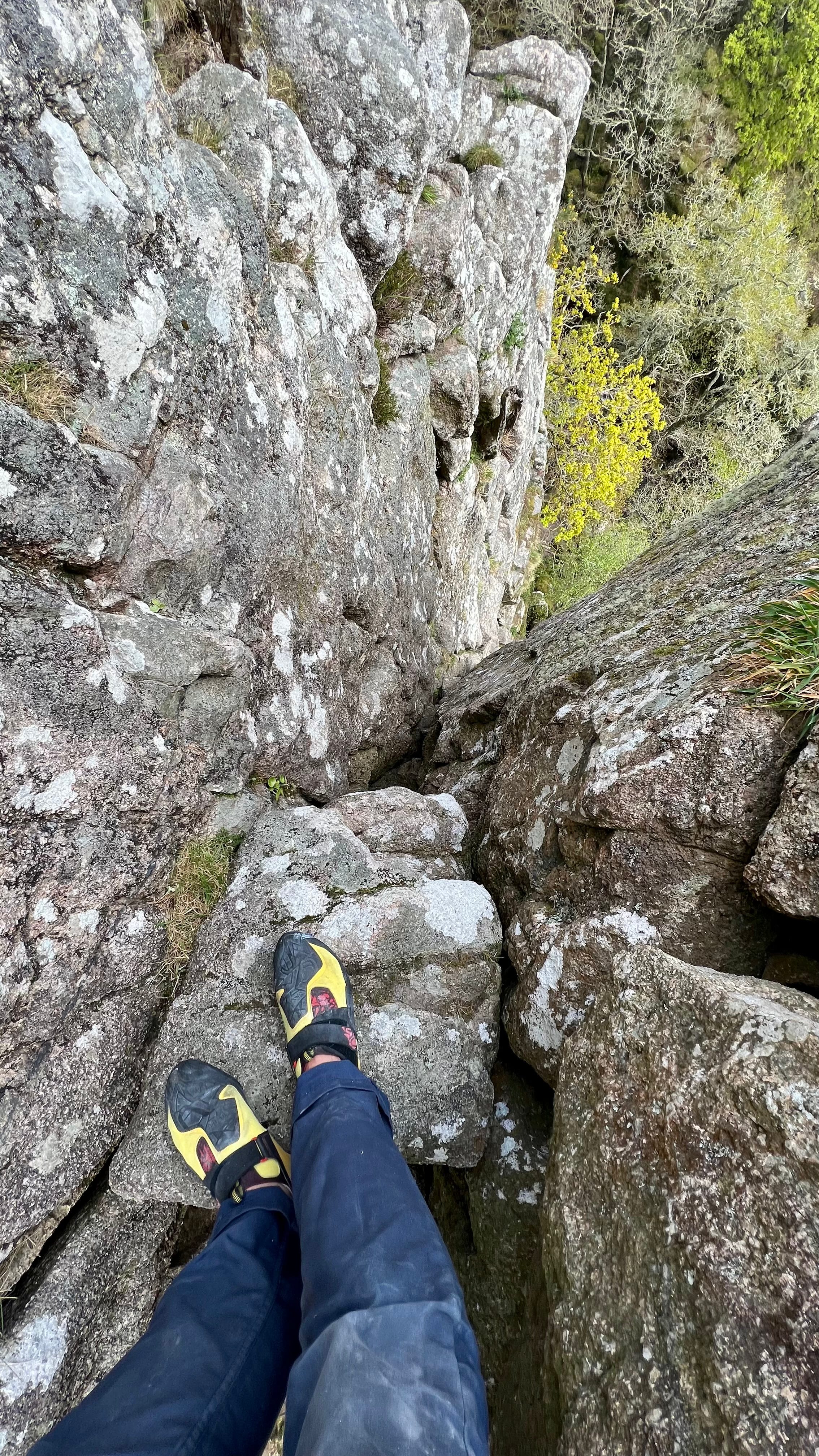
On my last visit I asked someone setting off up Central Groove if they’d done it before? Smiling, they replied: “A few dozen times, yeah.”
It’s like seeing an old friend.
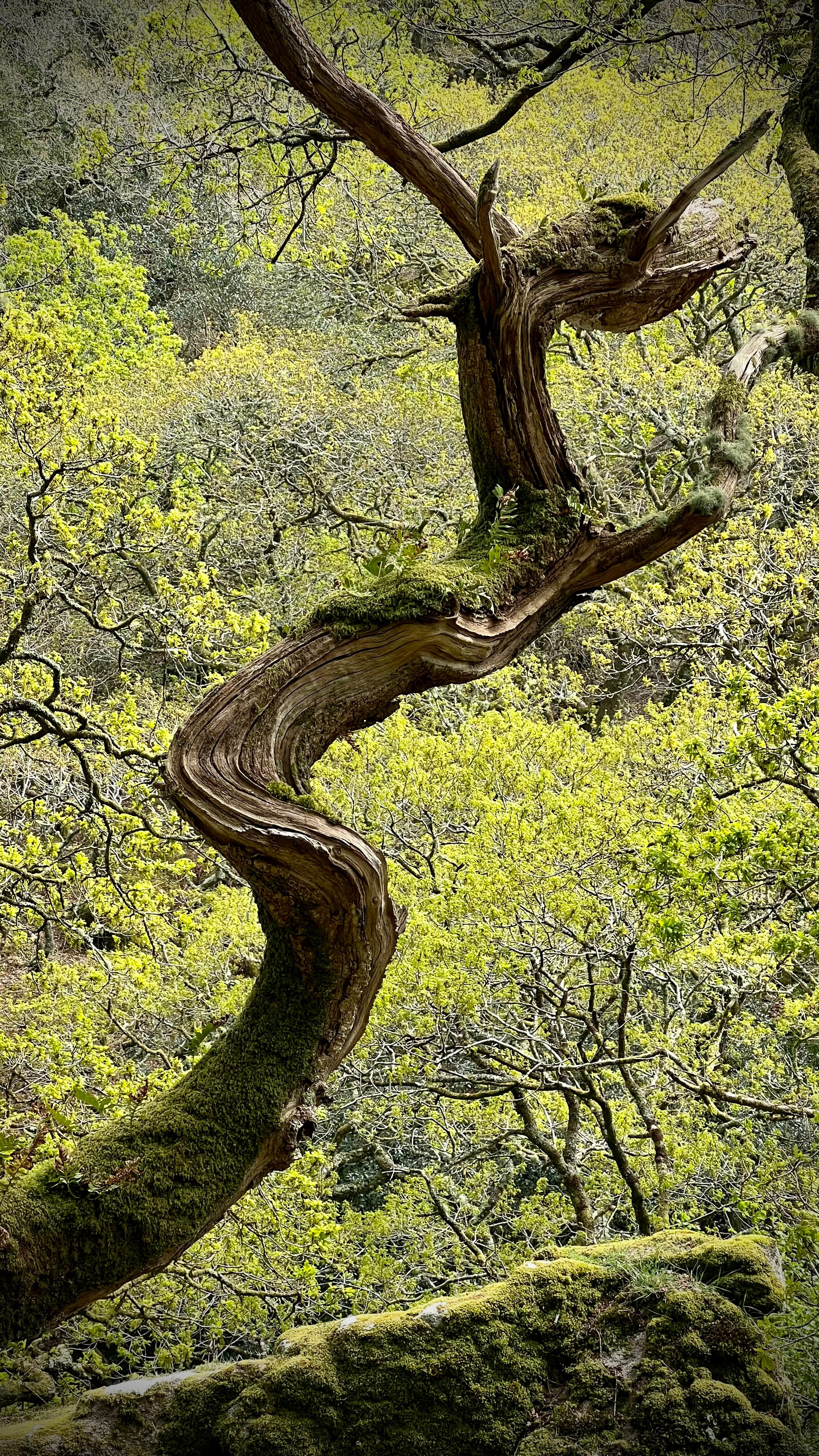
Very good, and bang on, especially about Central Groove being like an old friend. I also like the way you’ve deliberately omitted mention of lunch thieving squirrels to maintain the surprise for the uninitiated.